
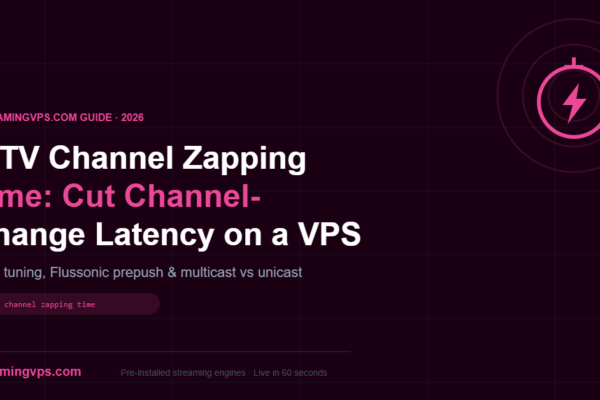
IPTV Channel Zapping Time: How to Cut Channel-Change Latency on a VPS
IPTV channel zapping time is the lag when switching channels. Cut it with GOP tuning and prepush buffering on a Flussonic/Wowza VPS — live in 60 seconds.
IPTV channel zapping time is the lag when switching channels. Cut it with GOP tuning and prepush buffering on a Flussonic/Wowza VPS — live in 60 seconds.
360 degree and VR live streaming needs 4 to 6x normal bitrate plus GPU transcoding. See real VPS specs, codecs, and setup steps from StreamingVPS.com tests.
Set up OBS Studio with a VPS streaming server. Covers RTMP ingest configuration, multi-destination relay, server-side recording, WebRTC output via Ant Media, and SRT streaming — complete step-by-step guide.
Do you need a CDN for live streaming? See concurrent-viewer benchmarks, HLS origin-pull setup, and when a single streaming VPS is enough.
Learn how to live stream a hybrid event: gear, VPS sizing, latency options, and remote Q&A workflow that keeps in-person and online audiences in sync.
Streaming QoE monitoring tracks rebuffering ratio, startup time & bitrate switches beyond server health. See key metrics, then get a managed streaming VPS.
Looking for the best VPS for streaming in 2026? Compare top options by performance, price, and pre-installed engines. Go live in 60 seconds.
CBR vs VBR vs CRF for live streaming compared: why platforms require CBR, real FFmpeg/OBS/Wowza settings, and keyframe intervals that actually work in 2026.
Learn how IPTV VPS hosting works, what specs you need, and how to run a reliable IPTV service. Compare engines, panels, and get started in 60 seconds.
Which live streaming metrics actually matter, how to pull them from Wowza, Ant Media & NGINX-RTMP stats APIs, and how to build a self-hosted analytics dashboard on a VPS.